
.png?width=16&height=19&name=Icon%20(1).png)




 6
6For marketing leaders in contract manufacturing, the pressure to demonstrate the effectiveness of marketing is constant. Budgets are scrutinised. Sales cycles are long. Results take time to materialise. And when questions come from sales or leadership, they are rarely subtle.
- What are we getting for this?
- Is this actually helping sales?
- Can we see the impact?
The difficulty is not that marketing has no impact. It is that the way impact is typically measured bears little resemblance to how buying decisions are actually made in manufacturing environments.
This gap between expectation and reality is where frustration sets in. The problem is not performance. It is the measurement model.
Most marketing ROI models assume a relatively direct path from activity to outcome. Campaigns generate leads. Leads become opportunities. Opportunities convert. Attribution follows. In contract manufacturing, that logic breaks down quickly.
Sales cycles are long and non-linear. Buyers do not move through neat stages. Decisions are made by committees, not individuals. Internal conversations matter as much as external ones. Influence accumulates quietly over time, often without a single visible trigger.
When marketing is judged using short-term, campaign-led metrics in this environment, important work is undervalued. Activities that support confidence, alignment, and risk reduction are often dismissed because they do not deliver immediate results.
At the same time, marketing teams are pushed towards activities that look measurable, even when they contribute little to long-term growth.
Neither outcome serves the business.
Buying committees distort attribution, not value
In EMS and CEM sales, deals are rarely the result of a single interaction.
An engineer may first encounter a business through a technical article or datasheet. A commercial lead might later review the website to assess credibility. A senior leader may only engage once a shortlist exists, scanning for signs of stability and risk.
Each interaction shapes perception. None, on its own, causes a deal to close. By the time a contract is awarded, dozens of influences have accumulated. Some are visible. Many are not.
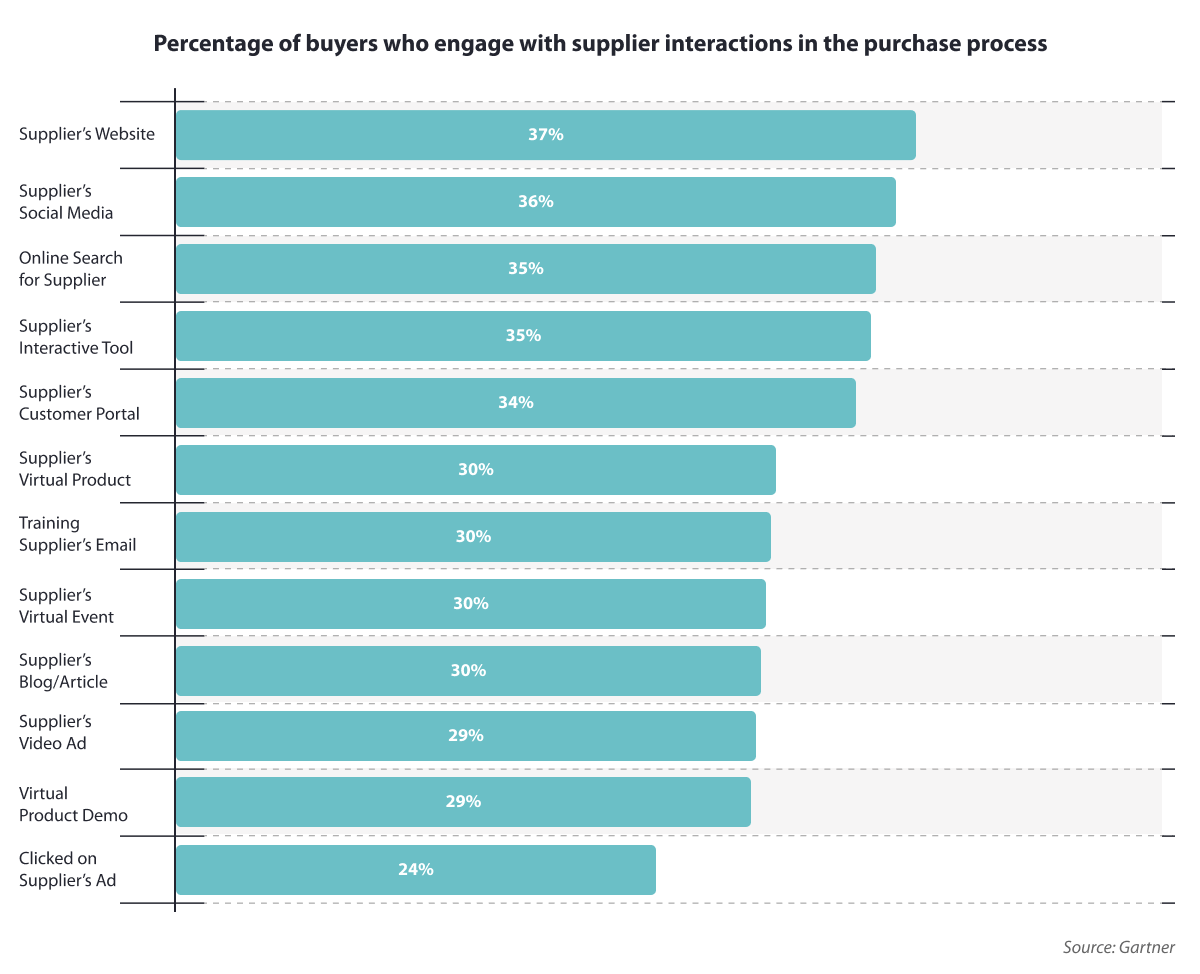
Traditional attribution models struggle here because they attempt to isolate cause and effect in a system where influence is cumulative and shared. This does not mean marketing impact is unprovable. It means it must be evidenced differently.
What “provable” actually means in complex B2B
In long-cycle, committee-driven sales, provable marketing ROI is not about demonstrating that one campaign caused one deal. It is about demonstrating that marketing reduces friction, improves quality, and supports sales confidence over time.
That evidence rarely shows up in a single moment. It appears in patterns.
- Sales conversations start at a higher level.
- Fewer obviously poor-fit enquiries enter the pipeline.
- Prospects reference messaging or content without prompting.
- Qualification becomes more efficient, even if the total cycle length remains long.
- The business is described more consistently, both internally and externally.
These signals matter commercially. They indicate that marketing is doing what it should do in complex B2B environments: shaping understanding, not chasing clicks.

End-to-end marketing creates cumulative impact
The most reliable way to create this kind of impact is through an end-to-end approach. End-to-end marketing recognises that buyers experience a business over time, across multiple touchpoints, and often without direct contact. It prioritises consistency over novelty, clarity over volume, and structure over campaigns.
Positioning, website experience, content, and sales enablement are viewed as integral components of a unified system, rather than separate initiatives. The value of this approach compounds. Each interaction reinforces the last. Over time, the business becomes easier to understand, more trustworthy, and easier to choose.
This is difficult to achieve through isolated campaigns. It requires intent, patience, and alignment.
Why this supports sales more than any single campaign
From a sales perspective, the benefits of end-to-end marketing are often felt before they are formally measured. Sales teams notice when prospects arrive better informed. When fewer conversations start from first principles. When objections are more specific and easier to address.
They also notice when marketing language reflects how the business actually sells and delivers. When the story holds together under scrutiny. This does not remove the need for strong sales execution. It makes that execution easier, more credible, and less reactive.
In this context, marketing ROI is not about replacing sales effort. It is about increasing its effectiveness.
Changing the internal conversation about marketing
One of the most significant benefits of this approach is internal. When marketing is framed as a series of campaigns, performance conversations tend to revolve around activity and volume. When marketing is framed as support for the buying process, the conversation changes.
- Instead of asking how many leads were generated, leaders ask whether buyers understand the business earlier.
- Instead of debating campaign performance, sales discuss whether friction in the cycle has reduced.
- Instead of listing outputs, marketing explains how it supports confidence and qualification.
This language resonates with sales and leadership because it reflects how they already think about risk, control, and growth.
Less activity. More intention
End-to-end marketing does not mean doing more. In practice, it often means doing less, more deliberately. Duplication drops. Reactive activity reduces. Effort concentrates on the moments that matter most in the buying process.
The question stops being “what we should do next?” and becomes “what does the buying committee need at this point?” That clarity simplifies prioritisation and makes marketing easier to defend.
Marketing ROI as confidence, not attribution
Ultimately, provable marketing ROI in contract manufacturing is about confidence.
- Confidence that the business is clearly understood
- Confidence that the right prospects are engaging
- Confidence that sales conversations start from a position of credibility
- Confidence that growth is supported by structure rather than luck
This kind of ROI does not always fit neatly into spreadsheets. It becomes evident in decision-making, pipeline quality, and commercial stability over time.
For marketing leaders operating in long-cycle, high-risk environments, that is not a compromise.
It is the point.
Final thought
Marketing in contract manufacturing is not failing because it lacks creativity or effort. It struggles when judged using models that do not accurately reflect how buyers actually make decisions.
When marketing is designed end-to-end and measured in terms of confidence, alignment, and reduced friction, its contribution becomes clearer and far more defensible. That is when marketing stops justifying itself and starts supporting growth in a way the whole business can stand behind.
Is it time to reevaluate your marketing approach? Contact Equinet now to discover how we can help you transform your marketing function into a confidence enabler.

